Fats as Foods
Fats should be selected using the first rule basic to a good diet, consume foods in their natural state, and not to eat excess calories, especially if aiming to lose weight, its important to remember that not all fats are bad, and you should aim to have around 15% of your daily calorie intake in the form of healthy fats, especially EFA', (Essential fatty Acids) Omega 3 Alpha Linolenic and Omega 6 Linoleic Acid.
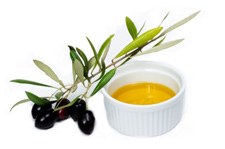 The best sources of fat are firstly those that are natural, and secondly, those not susceptible to free radical damage through oxidation. Basically the good fats include olive oil,grapenut oil and safflower oil. Some vegetable fat oils are subject to rapid oxidation because of their molecular structure, and should be avoided.
Fats represent the most concentrated form of energy in our diet, 9 calories per gram, however this energy fuelsource is best suited for endurance based aerobic exercise - often avoided by over-weight people.
All fats contain a mixture of the three types of fatty acids (saturated, mono saturated and polyunsaturated) They take their name from whichever of the three occurs as the predominant fatty acid.
Saturated fats defiantly need to be avoided, usually hard at room temperature and come primarily from animals except for coconut and palm oil.
Saturated fats reduce insulin sensitivity, causing a poor nutrient transfer to your working muscles whilst increasing the lavation of insulin in your blood stream.
Unsaturated fats are usually liquid at room temperature and come primarily from vegetable oils and oily fish (herring, mackerel, trout, and salmon).
If the chain contains only one double bond it's a Mono-unsaturated fat (E.g. olive oil, rapeseed oil, peanut oil, avocados).
If the chain contains two or more double bonds, it is called a Polyunsaturated fat (e.g. sunflower, corn oil).
These fats are healthier, and contain the EFA's (Omega 3 and 6) which the body requires from its nutritional intake, as it can't be produced naturally by the body - it has been proven to have an added benefit of lowering blood cholesterol levels, often associated with persons on a high saturated fat diet.
Hydrogenated fats is a process by which naturally unsaturated oils are changed into saturated oils by forcing hydrogen ions into the bonds of the unsaturated oils under extreme pressure.
The body is not designed to digest, or utilize these unnatural substances. In the manufacture of margarines or many food products (e.g. biscuits), hydrogenated oils are used as a cheap ingredient in place of butter.
THE FOLLOWING PAGE GIVES SOME IMPORTANT POINTS TO NOTE